
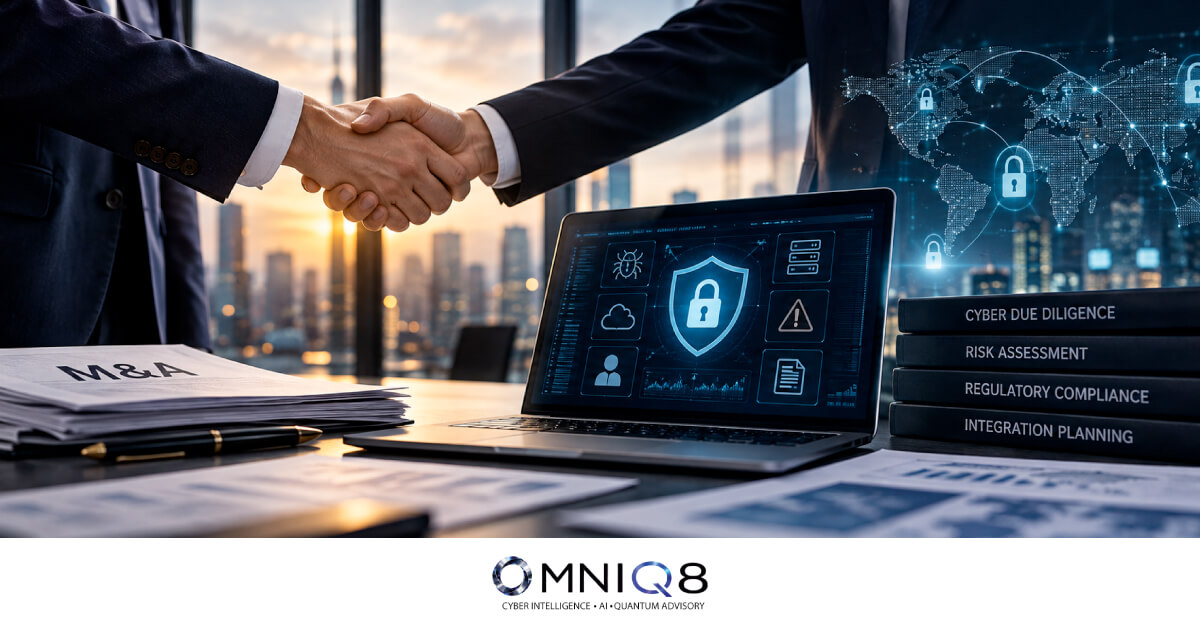
Cyber Risk as a Transaction Issue
In a merger or acquisition, cyber risk is no longer simply an IT concern. It can directly affect valuation, deal structure, integration timelines, regulatory exposure and the long-term value of the transaction.
A company may appear financially attractive on paper while carrying hidden cyber weaknesses, outdated technology, unresolved incidents, regulatory gaps or third-party dependencies that become the buyer’s responsibility after completion.
For buyers, boards and integration teams, understanding cyber risk before the transaction closes can make the difference between a controlled integration and unexpected value leakage.
Cyber risk should be treated as a transaction issue—not a post-deal technology problem.
Why Cyber Risk Matters in M&A
M&A transactions create significant change in a short period of time.
Systems are connected. Data is transferred. Employees move between environments. Vendors and third parties become interconnected. Identity and access models change. Security controls that previously operated independently may suddenly need to work together.
At the same time, transaction teams are often working under tight deadlines and confidentiality constraints.
This creates a difficult question:
What cyber risks are being acquired along with the business?
A target organisation may have:
- Unresolved security vulnerabilities
- Legacy infrastructure and unsupported systems
- Weak identity and access controls
- Inadequate backup and recovery capabilities
- Previous or undisclosed security incidents
- Regulatory or privacy compliance exposure
- Cybersecurity weaknesses across third parties
- Poorly documented technology environments
- Shadow IT and unmanaged applications
- Security controls that do not scale with the combined organisation
If these issues are identified only after closing, the cost of remediation can become significantly higher.
Cyber Due Diligence Before the Deal
Traditional financial, legal and commercial due diligence can identify many of the risks associated with a transaction. Cyber due diligence adds another critical dimension.
The objective is not simply to determine whether the target has cybersecurity policies.
It is to understand whether cyber risk could materially affect the transaction.
A focused cyber assessment can examine areas such as:
Security Governance
Understand how cybersecurity is governed, who owns cyber risk and whether the organisation has appropriate policies, processes and accountability.
Key questions include:
- Who is responsible for cybersecurity?
- How is cyber risk reported to leadership?
- Are security policies current and actively implemented?
- How are security risks identified and prioritised?
- Does the organisation have an established incident response process?
Technology Environment
The technology estate can reveal significant transaction risk.
Assessment may include:
- Infrastructure architecture
- Cloud environments
- Endpoints and servers
- Network architecture
- Business-critical applications
- Legacy platforms
- Unsupported technologies
- Security tooling
- Data environments
The objective is to establish what the buyer is actually acquiring—not simply what appears in the technology inventory.
Data and Privacy
Data acquired during a transaction can create both commercial value and regulatory responsibility.
Due diligence should consider:
- What sensitive data does the target hold?
- Where is the data stored?
- Who has access?
- How is sensitive information protected?
- Are retention requirements being followed?
- Are there cross-border data considerations?
- Are there known privacy or regulatory issues?
The Hidden Cost of Cyber Risk
Cyber weaknesses do not always appear as a direct line item on a balance sheet.
Instead, they can emerge as unexpected costs after completion.
For example, an acquiring organisation may discover that it needs to:
- Replace unsupported infrastructure
- Deploy new security technologies
- Remediate critical vulnerabilities
- Rebuild identity controls
- Conduct forensic investigations
- Improve backup and recovery
- Address regulatory requirements
- Retain specialist cybersecurity resources
- Re-engineer applications
- Accelerate technology modernisation
These costs can affect the economics of the transaction.
Cyber risk therefore needs to be considered alongside the broader operational and financial assumptions of the deal.
Day One Is a Security Milestone
For an M&A programme, Day One is often viewed as a business milestone.
From a cybersecurity perspective, it is also a critical control point.
The organisation should know:
- Which systems must be connected
- Which systems must remain isolated
- Who requires access
- Which privileged accounts exist
- How incidents will be detected
- Who owns incident response
- How critical services will be recovered
- What security controls must be operational immediately
A successful Day One does not necessarily mean every technology platform has been fully integrated.
It means the organisation understands the risks and has appropriate controls around the systems, people and data that matter most.
Post-Deal Cyber Transformation
Once immediate integration priorities are under control, organisations can move toward a longer-term security model.
This can include:
- Consolidating security platforms
- Modernising legacy technology
- Strengthening identity architecture
- Improving cloud security
- Establishing consistent security standards
- Enhancing security monitoring
- Improving resilience and recovery
- Strengthening third-party risk management
- Embedding cyber risk into enterprise governance
The goal is not simply to make two environments technically compatible.
It is to establish a resilient operating environment for the combined organisation.
A Resilient Approach to M&A
Every acquisition brings technology, data, people, processes and risk into a new operating environment.
The organisations that manage this effectively treat cybersecurity as part of the transaction lifecycle—from early due diligence through integration and beyond.
Cyber should therefore be considered at every critical stage:
Assess → Understand → Prioritise → Protect → Integrate → Transform
The objective is not to eliminate every cyber risk before a transaction.
It is to understand the risks clearly, make informed decisions, establish appropriate protections and prevent avoidable surprises from becoming value leakage.
OMNIQ8 M&A Cyber Advisory
OMNIQ8 helps boards, buyers and integration teams understand and manage cyber risk across the M&A lifecycle.
Our approach connects cyber due diligence, technology risk, regulatory considerations, integration planning and resilience to the broader objectives of the transaction.
From pre-deal assessment through Day One and post-deal transformation, the focus is on helping organisations understand what they are acquiring, where the material risks sit and what actions are required to build a resilient combined environment.
Before Risk Becomes Value Leakage
A transaction can change the organisation overnight.
Cyber risk should not be discovered after the deal is done.
Understand the cyber risk. Protect the transaction. Build resilience from Day One.